

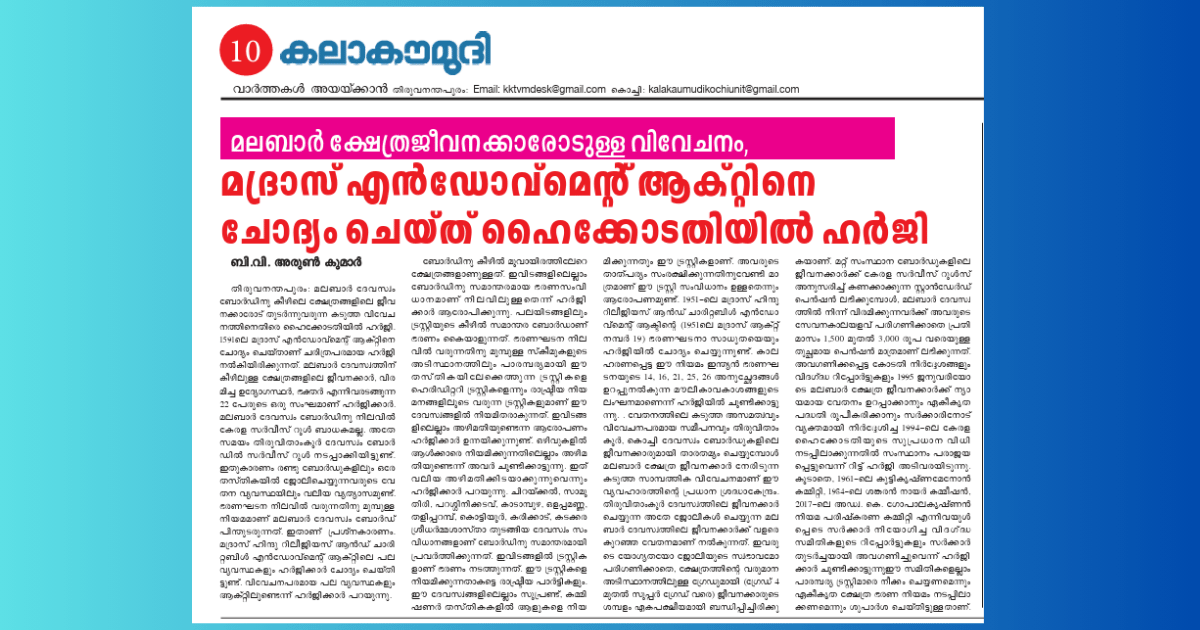
Challenging the 1951 Madras HR&CE Act: Plea in Kerala High Court Highlights Wage and Pension Disparities for Malabar Temple Employees
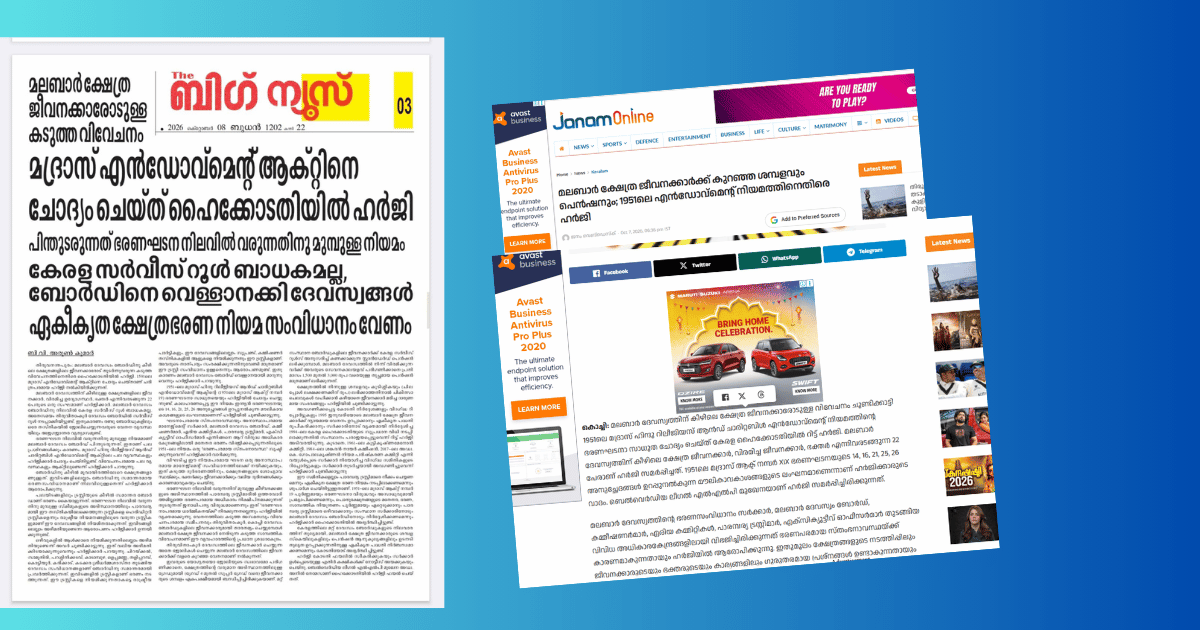
Kochi: Pointing out acute discrimination against temple staff under the Malabar Devaswom, a Writ Petition has been moved before the Hon’ble High Court of Kerala challenging the constitutional validity of the Madras Hindu Religious and Charitable Endowments Act, 1951[cite: 13].
The petition has been jointly filed by 22 individuals comprising serving temple employees, retired staff, and devotees[cite: 13]. The petitioners have approached the High Court through the Cochin-based law firm Belverdia Legal LLP[cite: 1, 13].
Violation of Fundamental Rights
The petition contends that the provisions of the Madras Act No. XIX of 1951 run contrary to the Constitution and violate fundamental guarantees enshrined under:
- Article 14: Equality before law and equal protection of the laws[cite: 13].
- Article 16: Equality of opportunity in matters of public employment[cite: 13].
- Article 21: Protection of life and personal liberty, including the right to a dignified livelihood[cite: 13].
- Articles 25 and 26: Freedom of conscience, free profession, practice, and propagation of religion, and freedom to manage religious affairs[cite: 13].
Administrative Stagnation and Institutional Fragmentation
A central grievance raised in the plea is the fragmented governance model governing Malabar temples[cite: 13]. The administration is split across numerous disjointed centres of authority—including the State Government, Malabar Devaswom Board, Commissioners, Area Committees, Traditional Trustees, and Executive Officers[cite: 13].
This multi-tiered division has resulted in administrative deadlock, creating severe hurdles in the day-to-day management of temples and causing acute distress for both temple workers and devotees[cite: 13].
Disparity in Pay and Pension Benefits
The plea highlights the glaring wage inequality suffered by temple staff in the Malabar region[cite: 13]. When compared to counterparts working under the Travancore and Cochin Devaswom Boards, Malabar Devaswom staff receive significantly lower salaries and inadequate retirement benefits[cite: 13].
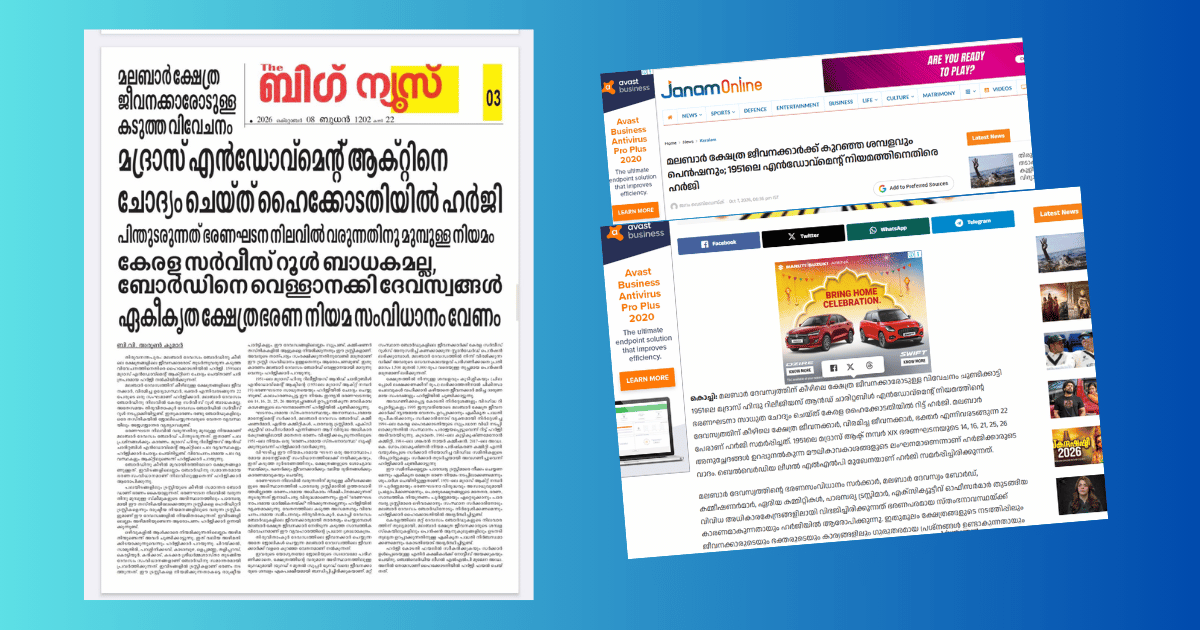
The petitioners seek a declaration that the obsolete 1951 Act is unconstitutional and invalid, and urge directions to introduce a unified, equitable framework that guarantees Malabar temple employees equal pay scales and pensionary benefits on par with other Devaswom Boards in Kerala[cite: 11, 13].
Belverdia Legal LLP is committed to representing the petitioners in this vital legal battle to secure institutional accountability, constitutional equality, and fair working conditions for temple staff[cite: 1, 13].
Case Profile:
Writ Petition challenging the constitutional validity of the Madras HR&CE Act, 1951 (Act XIX of 1951) and demanding service parity for Malabar Devaswom employees[cite: 11, 13].Counsel for Petitioners: Belverdia Legal LLP, Advocates & Legal Consultants, Cochin[cite: 1, 13].
